
Skip to content
Eurasian Health Technology Assessment Initiative

Evidence into policy.

A regional HTA initiative, established in 2015, bringing countries from the Balkans to Central Asia together to inform health policy with systematic assessment of medical technologies.

01

Ankara kick-off, March 2015

02

Istanbul meeting, November 2015

03

4th Forum, Rome, June 2017

A region new to HTA — and promising for its development.

Health technology assessment is a multidisciplinary field of policy analysis. It takes into account the medical, economic, social, ethical, legal and organizational aspects of the development, distribution or use of medical technology.

In the last thirty years, HTA has become mandatory in policy and health decisions in parts of Europe and North America. It has since spread rapidly in regions such as Latin America and Asia. Countries are contributing to the field by establishing unity based on cultural and geographical proximity.

In 2015 the Eurasian HTA Initiative was established under the leadership of the Turkish Evidence Based Medicine Society, with the support of TİKA (Turkish Cooperation and Coordination Agency). It includes countries extending from the Balkans to Central Asia that are new to the field, but promising for the development of HTA.

Wherever evidence is required and health policy decisions are made is the correct setting for HTA.

Rabia Kahveci, MD, MScHTA&M

Multidisciplinary

Medical, economic, legal, cultural, social, ethical and organizational aspects of a technology, assessed together.

Systematic

The properties and effects of a health technology — intended and unintended — evaluated in a transparent way.

Policy-facing

Scientific support for political decisions, wherever evidence is required and health policy is made.

Regional

A network from the Balkans to Central Asia, built on cultural and geographical proximity.

What HTA is.

T

Health technology

Health technology covers all procedures applied to improve health, prevent illness, make diagnoses, treat, rehabilitate or provide long-term care — including drugs, medical devices, medical and surgical procedures, and the institutional or supporting systems that provide these services.

A

Health technology assessment

Health technology assessment is the systematic evaluation of the properties and effects of a health technology. It addresses the direct and intended effects of the technology, as well as its indirect and unintended consequences, and is aimed mainly at informing decision-making regarding health technologies.

Eurasian HTAİ

An integrated model.

An integrated evidence-informed decision-making model, presented by Rabia Kahveci at the Eurasian HTA meeting: from evidence-based medicine to national and hospital-based HTA, knowledge translation and patient safety.

01 Evidence-based medicine

The conscientious, explicit and judicious use of current best evidence in decisions about the care of individual patients — integrating clinical expertise with the best available external evidence from systematic research.

02 Evidence-based clinical practice

Evidence summaries and clinical practice guidelines — developed de novo, adapted or adopted — at micro, meso and macro levels of the health system.

03 Evidence-based policy-making

Policy decisions that combine political expertise with the expectations and values of society, and that use HTA wherever evidence is required.

04 Health technology assessment

Policy research that provides decision-making bodies with reliable, scientifically provable findings on all of the effects of a health technology.

05 Full HTA

Evidence analysis, outcomes (benefits and risks), costs, cost-effectiveness, and ethical and legal implications — together with policy culture, priorities and organizational issues.

06 National HTA

Macro-level HTA used for pricing, reimbursement, vaccination, screening and other national decisions on the uptake of health technologies.

07 Hospital-based HTA

Meso-level assessment inside healthcare institutions, so that local technology decisions are also informed by evidence.

08 Knowledge translation

A dynamic, iterative process of synthesis, dissemination, exchange and ethically sound application of knowledge — closing the gap between research, practice and policy.

09 The HTA team

Health professionals, data specialists, managers and policymakers, academics, economists, jurists, medical ethics experts, sociologists and biomedical engineers.

10 Patient safety

The aim of the integrated model: clinical and service quality, indicators and standards, patient satisfaction and accreditation, within legal, cultural and organizational context.

Forums

Meetings of the Initiative.

Members were representatives of ministries of health or other governmental agencies in their countries, with extensive experience in quality improvement, evidence-based medicine and/or HTA. Their backgrounds were in medicine, pharmacy, nursing, management or economics, with additional training in health policy, management, quality improvement, health economics and/or HTA.

01 · March 2015

Kick-off meeting, Ankara

The first meeting of the Initiative, with participation from Azerbaijan, Bosnia and Herzegovina, Macedonia, Montenegro, Kazakhstan, Kyrgyzstan and Turkey.

02 · November 2015

Second meeting, Istanbul

The same countries returned, except Azerbaijan. Albania joined as a new member and Tunisia took part as an observer country. Country teams presented national work on evidence-informed decision-making and HTA.

03 · 17–21 June 2017

4th Eurasian HTA Forum, Rome

A later forum of the Eurasian Health Technology Assessment network, organized with the support of TİKA and the Turkish Evidence Based Medicine Association.
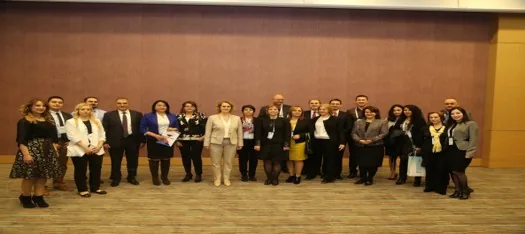
Ankara · March 2015

Participants at the 1st Eurasian HTA Forum, The Green Park Hotel, Ankara, 12–13 March 2015. From Rabia Kahveci’s Eurasian meeting lecture.
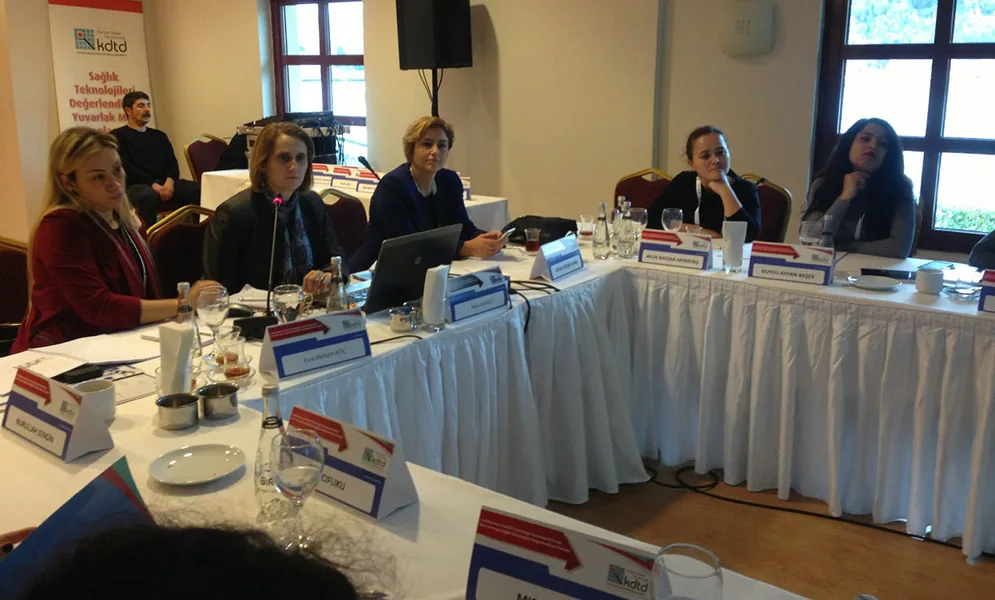
  • Held with the 2nd Evidence-Based Medicine Symposium and the 4th National HTA Forum, 12–13 March 2015, at The Green Park Hotel in Ankara.
  • The official programme title was the 1st Eurasian Health Technology Assessment Forum, organized by the Turkish Evidence Based Medicine Society with TİKA support.
  • The symposium theme was clinical guidelines and health technology assessment. About 300 people from 11 countries took part, including ministries, social security, universities, hospitals, civil society and industry.
  • Country teams came from Azerbaijan, Bosnia and Herzegovina, Macedonia, Montenegro, Kazakhstan, Kyrgyzstan and Turkey. This was the founding meeting of the Initiative.
Istanbul · November 2015

3rd HTA Round Table, 27 November 2015, İstanbul Haliç Congress Center — held the day before the 2nd Eurasian HTA Forum at the same venue.
  • The 2nd Eurasian HTA Forum took place on 28 November 2015 at İstanbul Haliç Congress Center, during the 2nd International Drug and Pharmacy Congress.
  • It was chaired by Assoc. Prof. Rabia Kahveci and supported by TİKA. Two experts each came from Albania, Bosnia and Herzegovina, Montenegro, Kazakhstan, Kyrgyzstan and Macedonia; Tunisia joined as an observer.
  • Azerbaijan did not attend. Albania joined as a new member. Country teams presented the state of HTA, clinical guidelines and evidence-based medicine, then set a cooperation roadmap through a SWOT analysis.
Rome · 17–21 June 2017

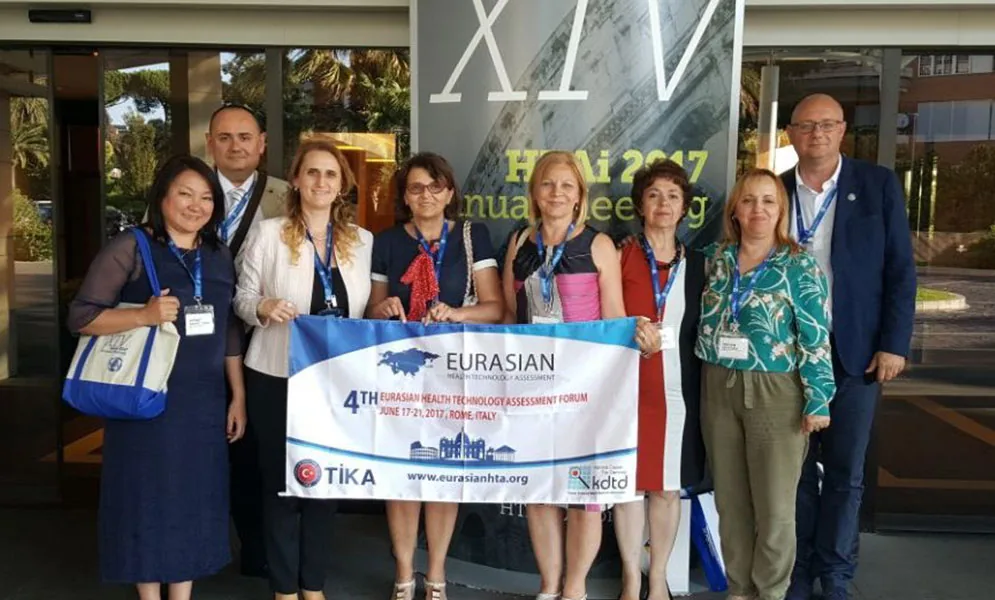
Participants of the 4th Eurasian HTA Forum at the HTAi 2017 Annual Meeting, Rome, 17–21 June 2017.

  • The forum was held during the 14th HTAi Annual Meeting in Rome, themed “Towards an HTA Ecosystem: From Local Needs to Global Opportunities.”
  • Rabia Kahveci co-chaired the HTAi meeting with Prof. Americo Cicchetti. TİKA supported daily Eurasian sessions of about two hours.
  • Members from Albania, Macedonia, Bosnia and Herzegovina, Montenegro, Tunisia, Azerbaijan, Kazakhstan and Kyrgyzstan discussed regional HTA development and a roadmap for the years ahead.
  • On 19 June a panel presented Eurasian country experiences on clinical guidelines and HTA, with speakers including Kahveci, Zisovska, Novo, Simović, Kulkhan, Baryktabasova and Seyidov.

Country HTA profiles.

Highlighted countries took part in the 2015 Eurasian HTA meetings. Click a country — or its gold pin — to open the national profile presented there.

Country profiles

Choose a country.

Gold countries on the map mark members and the observer that joined the 2015 meetings. Click one to read the HTA profile presented there.

Member country

Albania

Tirana

Albania joined the Initiative as a new member at the Istanbul meeting in November 2015. The Ministry of Health remains the major funder and provider of a mainly public health system. The National Centre for Quality, Safety and Accreditation of Health Institutions (NCQSA), established in 2005, coordinates quality assessment and clinical guideline work.

  • Within the Health System Modernization Program, NCQSA assessed health technologies and existing HTA capacity, and trained policymakers and clinicians in HTA and evidence-based medicine.
  • The project produced a training curriculum for HTA and EBM, introduced the AGREE instrument for guideline development, and a national strategy for clinical practice guidelines and protocols.
  • Since 2010, 105 practical clinical guidelines and 115 protocols have been developed for hospital care, with further guidelines for primary care, mother and child care, and ongoing review at “Mother Teresa” University Hospital.
  • HTA and EBM criteria are used in the Obligatory Health Insurance Fund reimbursement list, hospital purchasing, and the National Agency for Medicinal Products and Medical Devices.
Member country

Azerbaijan

Baku

Azerbaijan took part in the kick-off meeting in Ankara in March 2015. The country did not attend the second meeting in Istanbul in November 2015. A national country presentation was not included in the 2015 forum pack.

Member country

Bosnia and Herzegovina

Sarajevo

The Federation of Bosnia and Herzegovina has a Book of Rules on the introduction of new health technologies in healthcare institutions and private practice, and on the procedure of approval for their use (Official Gazette of FBiH no. 70/14), based on the Healthcare Law.

  • An HTA commission of seven members is established by the Federal Minister of Health: a medical doctor, a stomatology doctor and a pharmacist with academic degrees, a technical engineer, and representatives of AKAZ, the Federal Health Insurance Fund and the Federal Ministry of Health.
  • The final HTA report covers the health problem, current use of the technology, technical characteristics, clinical safety and efficacy, costs and economic evaluation, and ethical, social, legal and organizational principles.
  • Healthcare institutions must not use a new health technology without permission issued by the Ministry in accordance with the Book of Rules.
  • AKAZ has the mandate to define, validate and disseminate evidence-based clinical practice guidelines, and provides education and training on EBM and guidelines.
Member country

Kazakhstan

Astana

Kazakhstan presented a national HTA and standardization system based at the Republican Center for Health Development. HTA sits alongside clinical protocols, service standards, evidence-based medicine centres and disease-management programmes.

  • By 2015 the country reported 5 full HTA reports and 246 rapid HTA reports, later 3 further full reports and 304 rapid reports, with capacity building in a dedicated HTA unit.
  • Five EBM centres were established, with a head office in CS&HTA, plus training modules on EBM, clinical epidemiology and biomedical statistics.
  • The Ministry’s Order of 20 May 2014, no. 272, set rules for using new diagnostic, treatment and rehabilitation technologies. Since 2011 there had been 1,091 HTA-related requests.
  • International positioning included membership of INAHTA, ISPOR and GIN, and collaboration with NICE, UNFPA and CSIH.
  • The 2016–2020 HTA plan covered a legal framework, human resources, decentralization to the regional level, hospital-based HTA, an HTA information bank, and further work with ISPOR, INAHTA and HTAi.
Member country

Kyrgyzstan

Bishkek

Kyrgyzstan presented institutionalization of health reform as the base for developing HTA initiatives. Health reform began in 1992, with a strong national programme for evidence-based clinical guidelines. Formal HTA was still absent in 2015, and the ISPOR Kyrgyzstan Chapter was established that year.

  • A Strategy for the development of evidence-based medicine (2006–2010) and Ministry of Health orders defined the structure, methodology and expert council for clinical guidelines and protocols.
  • A standardized process covers topic choice, multidisciplinary groups, evidence search and appraisal, external review, Ministry approval, publication, adoption and revision. The AGREE instrument is used to appraise guideline quality.
  • Patients and public representatives were involved in guideline development, and guidelines were accompanied by patient information. Financial incentives were used to support implementation.
  • Reported barriers included the absence of health technology assessment and of cost-effectiveness analysis, limited English and internet access, and fragmented quality management.
  • The ISPOR Kyrgyzstan Chapter’s mission included serving as a bridge for people interested in HTA and pharmacoeconomics at country and regional level.
Member country

Montenegro

Podgorica

Montenegro presented HTA as a defined but not yet implemented part of its quality and patient-safety reforms. The Law on Health Care assigned the Ministry of Health to define criteria, standards and guidelines for HTA. A Book of Rules for HTA had not been adopted by November 2015.

  • A Directorate for the improvement and quality control of healthcare was set up in 2010. The National Strategy for improving health-care quality and patient safety covered 2012–2017.
  • The Ministry of Health had developed 20 evidence-based clinical guidelines, with further guidelines supported by UNICEF. Working groups of leading experts draft each guideline; a commission appraises them with a translated AGREE instrument.
  • The National Strategy includes systematic evaluation of the properties, effects and impacts of health-care technology, to be conducted by interdisciplinary teams from the Ministry of Health, the Institute of Public Health, CALIMS and the Health Insurance Fund.
  • That HTA aim was defined in the 2014 action plan, but had not yet been implemented at the time of the Istanbul forum.
Member country

North Macedonia

Skopje

North Macedonia presented HTA as a bridge between evidence and policy-making, alongside a legal obligation to use clinical guidelines and growing pharmacoeconomic work. An ISPOR Macedonia Chapter was established in 2011.

  • Activities included continuous medical education since 2000, updated pharmaceutical procedures, Drug and Therapeutics Committees in tertiary care, and pharmacoeconomic analysis for drugs subject to reimbursement.
  • Clinical guidelines were adopted and adapted across disciplines, published as a legal obligation in the Official Gazette, and monitored through the Health Insurance Fund and the Agency for Quality and Accreditation of Healthcare Institutions.
  • A School for practicing Evidence-Based Medicine was established under the Faculty of Medical Sciences, University in Štip. UNFPA supported regional workshops on guideline adaptation.
  • The country was joining EVIPNet to strengthen evidence briefs for policy, national dialogues and knowledge translation. Priority topics included human resources, immunization, insurance coverage, patient safety and maternal and neonatal mortality.
Observer country

Tunisia

Tunis

Tunisia joined the Istanbul meeting as an observer. INASanté — the National Instance for Accreditation in Health Care — was created by decree on 6 September 2012. It was presented as the second HTA and accreditation agency in the WHO EMRO region and on the African continent.

  • INASanté is a public, independent, non-administrative scientific authority. Its missions are health technology assessment, accreditation of public and private health institutions, and information of professionals and citizens.
  • HTA is framed as providing evidence to decision-makers for better allocation of health resources, as a step toward universal health coverage.
  • In 2015 the agency ran stakeholder interviews and a consensus workshop on HTA strategy, processes, collaboration, organization and drugs.
  • INASanté was already a member of INAHTA, HTAi, HTAsiaLink and the EMRO HTA Network, and took part in the Eurasian forum in order to discover other HTA experiences and join Eurasian HTA.
Member country

Türkiye

Ankara

Türkiye leads the Initiative through the Turkish Evidence Based Medicine Society, with the support of TİKA. Rabia Kahveci’s meeting lecture set out HTA as policy research that sits between evidence-based medicine and evidence-based policy-making.

  • Before a dedicated HTA process, decisions were made through pricing committees (Ministry of Health reference pricing and SSI discounting for pharmaceuticals), reimbursement committees, ad hoc committees on technology uptake, clinical guidelines, vaccination committees and hospital purchasing departments.
  • Kahveci asked whether all of those decisions were evidence-based — and how one would know — and argued for an integrated model that connects EBM skills, guidelines, HTA, knowledge translation and patient safety.
  • The Initiative was created after a need for a Eurasian HTA platform was felt in the national and international work of the Evidence-Based Medicine Association.